
Interconfessional Materialities: Greek Orthodox, Catholic and Protestant Encounters in the Holy Roman Empire and in the East (17th-18th centuries)
Du 14 mars au 04 avril 2023
- iCal
- Yahoo!
- Outlook.com
- Office365
Choose a calendar service :
Conférences de Stefano Saracino, directeur d'études invité.
Stefano Saracino, Friedrich-Schiller-Universität Jena, directeur d'études invité par Vassa Kontouma pour une série de quatre conférences : « Interconfessional Materialities: Greek Orthodox, Catholic and Protestant Encounters in the Holy Roman Empire and in the East (17th-18th centuries) ».
1. Mardi 14 mars 2023, 10h-13h – MSH Raspail, salle 26
The Stuff that the Confession is made of: Religious Materiality of the Greek Merchants of Vienna (18th century)
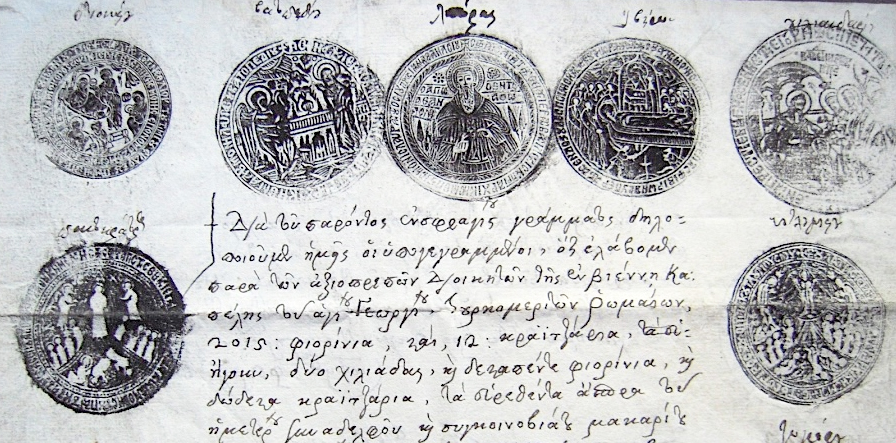
In the early 18th century Greek merchants in Vienna experienced multiple liminalities, being Ottomans but not Muslims, being Christians but not Catholics, being fleeting subjects moving between two Empires. The talk will be about the evidence on the material culture of Greek merchants belonging to the confraternity of Holy George in Vienna (founded at the end of the 17th century). How were religious objects used by these far distance migrants in interconfessional encounters? What do they tell us about conflicts and compromises between the confessional culture from their regional Ottoman homelands and the catholic confession in Vienna?
2. Jeudi 23 mars 2023, 16h-18h – Sorbonne, salle D54 Égyptologie
The Agency of Objects for Greek Orthodox Almscollectors in the German Lands – The Example of the Album Amicorum of the Athonite Theoklitos Polyeidis
The questions addressed to this source will be twofold: On one side how does the object testify for Polyeidis’ interconfessional strategies. Did he search the encounters with particular confessional networks, e.g. with radical pietism and philadeliphic movements which found support and protection in the “sovereign” mikro-states of Germany? Are the speech and writing acts documented in this exemplar typical for supposedly Western traditions, like the alba amicorum used by perambulating students and scholars? What do we learn about the Greek Orthodox identity of the owner of the booklet, Polyeidis?
3. Mardi 28 mars 2023, 16h-18h – MSH Raspail, salle 20
Materiality and Everyday Life of the Greek Students in Pietist Halle
What can we learn about the materiality and the everyday life of these students during their stays – usually lasting several years? What do we know about devotional objects they used to practice their religion, about objects connected to their epistemic practices (like translating bible texts into Modern Greek), or about their accommodation and catering in Halle?
4. Mardi 4 avril 2023, 16h-18h – MSH Raspail, salle 20
Which Things does a One-Man-Missionary-Company need? The Pietist Outpost in Constantinople
Evidence concerning the materiality of the Pietist missionary outpost in Istanbul is rich: From descriptions of the apothecary shop and orders of pharmaceutical products from the proto-industrial Waisenhausapotheke in Halle in the letters sent by the agents to Halle, to an inventory of objects belonging to Bachstrom, which were stored in the Dutch embassy in Istanbul for him after his departure, and last but not least objects of Ottoman provenience in the chamber of curiosities in Halle (the “Kunst- und Naturalienkammer”).